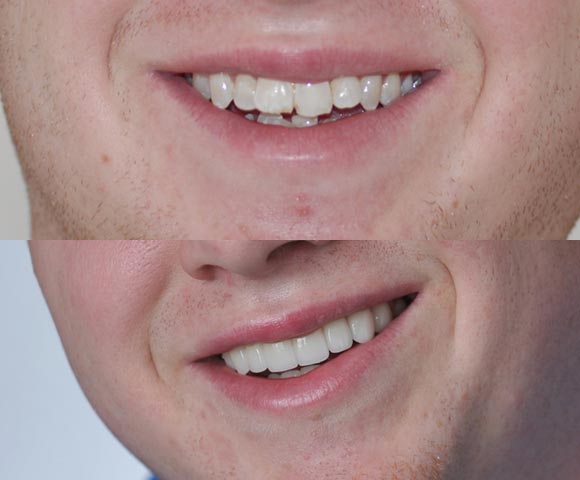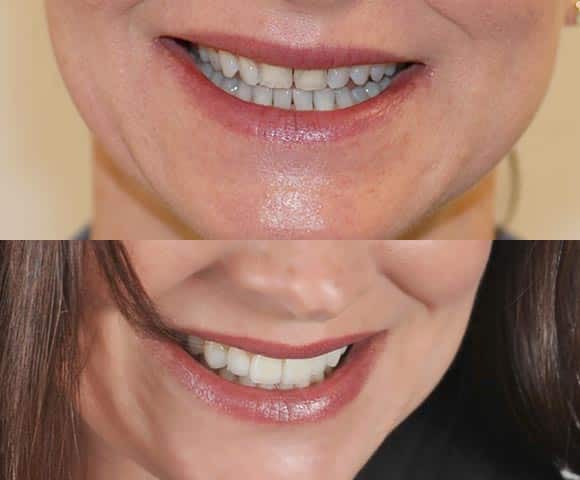
Crowded teeth happen when there isn’t enough room in the jaw for teeth to line up properly. The result can be overlapping, twisting, or teeth that look “bunched up.”
There are two common paths:
- Orthodontics (braces or clear aligners) to move teeth into position
- Cosmetic dentistry (like veneers) to change the appearance of alignment for the right
candidates
Veneers don’t “move teeth” the way braces do, but in mild-to-moderate cases they can create a straighter-looking smile—often faster—while also improving color and shape.

Benefits of Veneers for the Right Crowding Case
- A natural-looking result (shape, size, and color are designed together)
- Customized planning (every tooth is designed to fit your face and smile)
- A faster timeline than traditional orthodontics in select cases
The Typical Veneer Process
- Consultation & planning: We evaluate your teeth, bite, and goals, then map out the smile design.
- Preparation & impressions: If needed, we conservatively shape the teeth and take impressions. You’ll wear temporary restorations so you can preview the look.
- Final placement: We bond the final veneers and fine-tune the bite and aesthetics.
Veneers vs. Braces
Braces/aligners are best for significant crowding or bite issues that need true orthodontic correction. Veneers can be a strong option when your priority is the look of the front teeth and you’re a good candidate clinically.