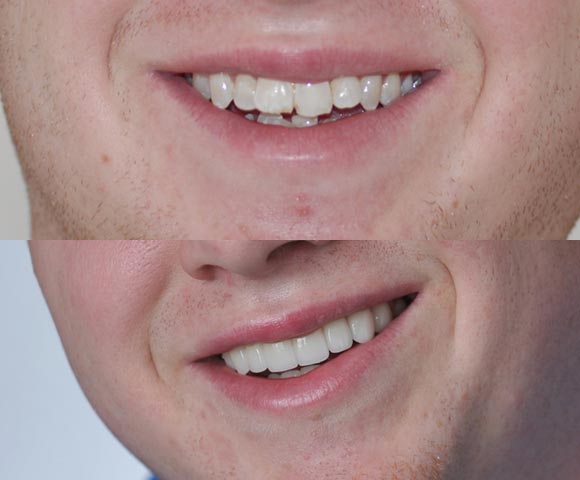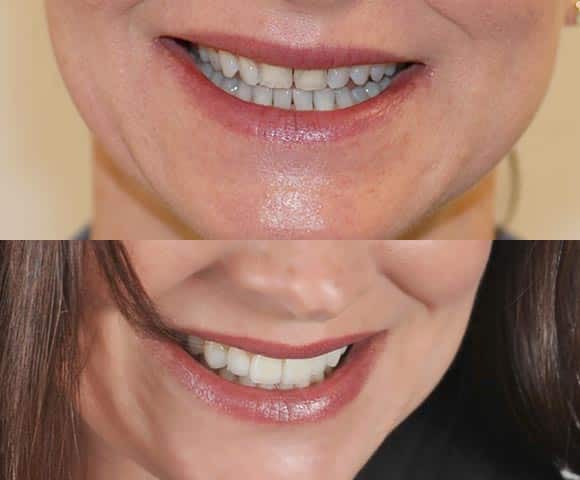
If whitening hasn’t helped much, you may be dealing with intrinsic discoloration—staining that’s inside the tooth, not just on the surface.
One common cause is exposure to older tetracycline antibiotics during tooth development. These medications can bind with calcium and lead to long-lasting gray/brown discoloration or horizontal banding. (Cleveland Clinic)
Tetracycline Staining: What It Looks Like
Tetracycline-related discoloration often appears as:
● Gray, brown, or bluish staining
● Banding or stripes across the teeth
● Darkening that can become more noticeable over time
Can Teeth Whitening Fix It?
Whitening can help some intrinsic stains—but results vary, and deep tetracycline staining can be stubborn. (ADA)
If you’ve already tried whitening and aren’t happy with the change, we’ll talk through next-step cosmetic options.
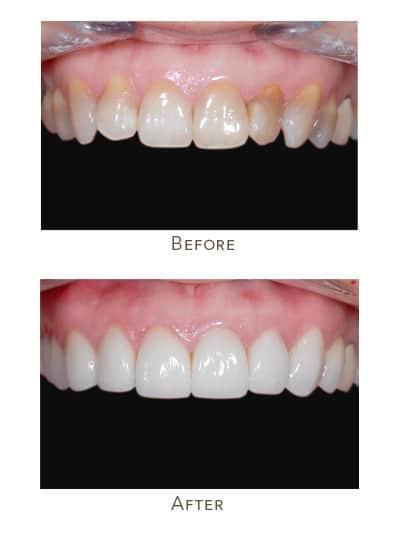
Options When Whitening Isn’t Enough
Depending on your teeth and your goals, we may recommend:
- Porcelain veneers to mask dark staining and improve shape
- Crowns when a tooth also needs strength or major repair
- Bonding in select situations
The right choice depends on how dark the discoloration is, how much tooth structure you have, and how natural/translucent you want the final look.
What About Surface Stains?
If stains are coming from coffee, tea, red wine, tobacco, or plaque buildup, professional whitening and cleanings are often very effective. (ADA)